

Strona główna » Diary » Hiring bias isn’t a bug. It’s a side effect of how hiring systems work
Hiring bias isn’t a bug. It’s a side effect of how hiring systems work.

Most hiring bias doesn’t come from bad intentions.
It comes from pressure.
Too many roles. Too little time. Too many profiles that look almost the same. When decisions have to be made quickly, people default to shortcuts — familiar titles, known companies, recognizable paths. Not because they’re best, but because they’re easy to justify.
That’s how bias quietly becomes operational.
Not as prejudice, but as pattern repetition.
Why traditional hiring systems amplify bias
Most recruitment tools were designed to manage volume, not judgment.
They optimize for:
- speed,
- throughput,
- and consistency.
What they don’t optimize for is context.
So when recruiters are under pressure, systems encourage filtering instead of understanding. Keywords become proxies for competence. Career paths become checklists. Anything that doesn’t fit neatly gets deprioritized — not because it’s wrong, but because it’s harder to assess.
Bias isn’t introduced at the moment of decision.
It’s baked into the structure long before that.
AI didn’t create this problem — it exposed it
When AI entered recruitment, the expectation was that it would “remove human bias.”
What actually happened was more uncomfortable: AI learned exactly how hiring had been done before — and repeated it with extreme efficiency.
If historical hiring favored certain schools, titles, or backgrounds, AI picked that up.
If past “successful” hires looked similar to one another, AI learned that similarity equals success.
That’s not an AI failure. That’s a mirror.
The real risk isn’t that AI is unfair.
The risk is that it automates assumptions without making them visible.
The difference between matching and understanding
Older recruitment AI focused on correlation:
- this title appeared often,
- this employer showed up before,
- this keyword correlated with past hires.
Modern AI can do something more useful: interpret signals instead of copying patterns.
For example:
- A side project can indicate problem-solving, not “lack of focus.”
- A non-linear career path can signal adaptability, not instability.
- A hobby or community involvement can point to collaboration or leadership — without needing to resemble existing employees.
This shift — from matching profiles to interpreting context — is where AI actually becomes helpful.
But only if it’s designed that way.

Bias doesn’t disappear with better models alone
Even the most advanced AI won’t fix hiring if it’s dropped into the same incentives and workflows.
If recruiters are rewarded purely on speed, AI becomes a faster filter.
If recommendations aren’t explainable, AI becomes authority instead of support.
If systems make decisions silently, accountability disappears.
Bias reduction doesn’t come from “human-in-the-loop” as a slogan.
It comes from clear boundaries:
- What AI can suggest
- What humans must decide
- And why a recommendation exists at all
How we think about this at Laidback
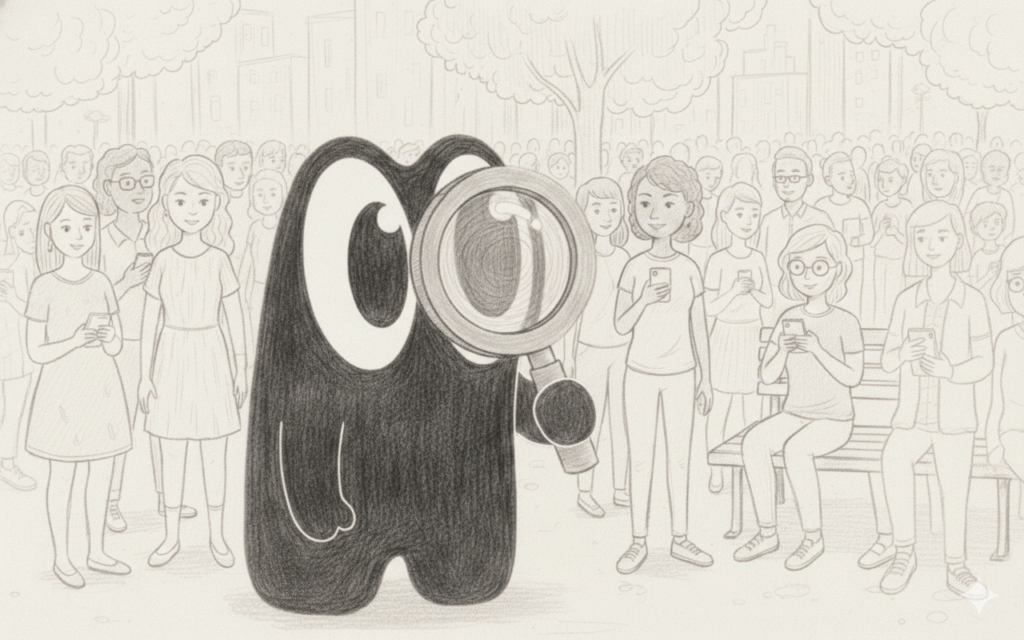
At Laidback, we don’t treat AI as a judge.
We treat it as a lens.
The goal isn’t to decide who gets hired.
The goal is to help recruiters see more clearly.
That means:
- sourcing candidates from a wider set of signals, not just CVs,
- interpreting experience in context instead of ranking by similarity,
- excluding sensitive attributes from evaluation (gender, race, or age),
- and making recommendations explainable rather than opaque.
Most importantly, Laidback doesn’t automate hiring decisions.
It reduces noise so humans can make better ones.
When recruiters understand why someone is surfaced — and are not forced to trust a score without context — bias becomes easier to challenge instead of easier to ignore.
The real question going forward
The future of hiring isn’t about choosing between humans and AI.
It’s about deciding what kind of system we’re building.
One that:
- optimizes for speed and familiarity,
or one that: - creates space for better judgment.
AI can absolutely help make hiring fairer — but only if it’s designed to support thinking, not replace it.
Because hiring isn’t just a data problem.
It’s a decision problem.
And better decisions require clarity, context, and responsibility — not just automation.