

Strona główna » Diary » Less screening. Better shortlists.
Less screening. Better shortlists.
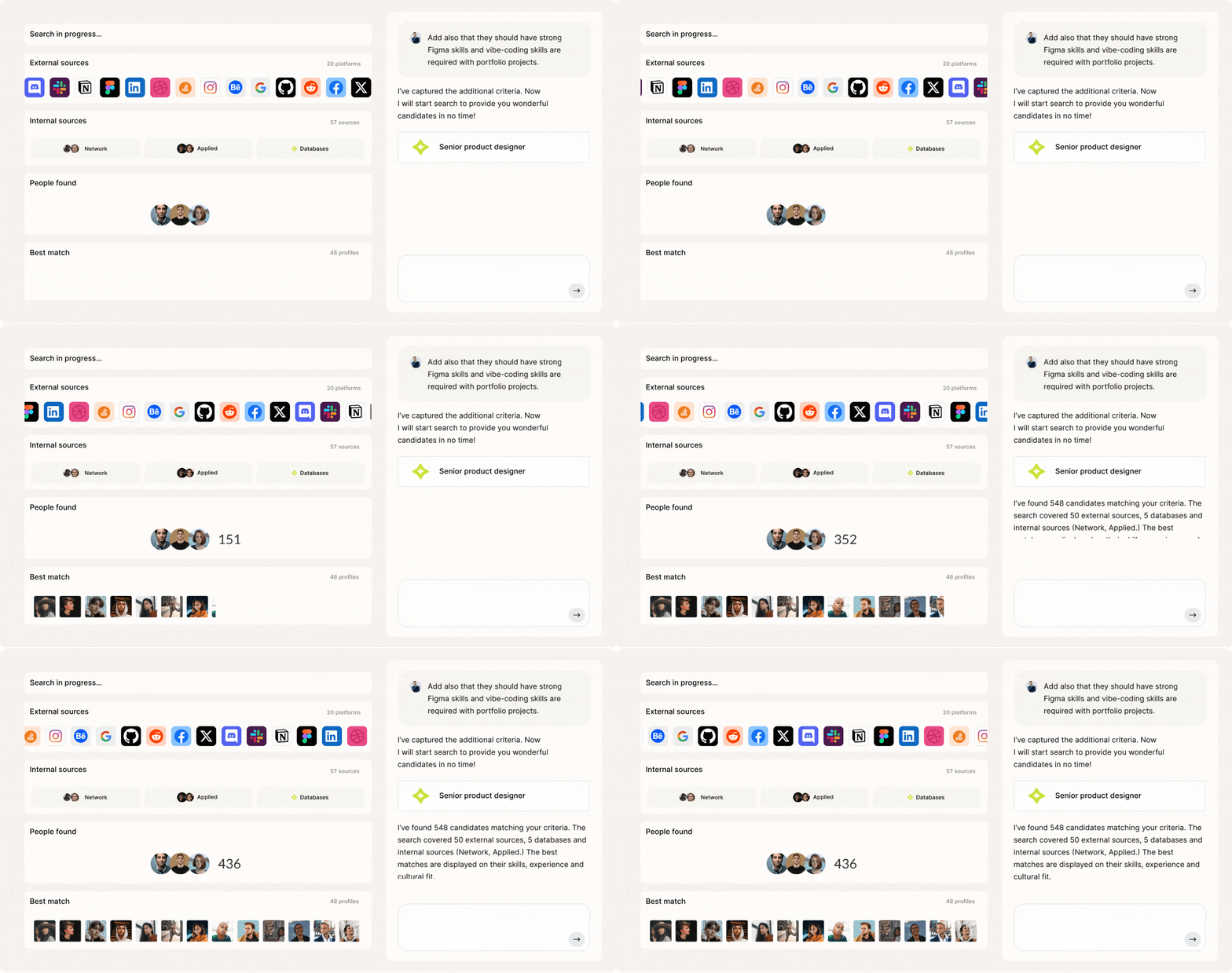
Hiring shouldn’t feel like wading through noise.
Yet for many teams, that’s exactly what it is: hours spent reviewing profiles, comparing similar CVs, and moving candidates through systems that demand attention without offering clarity. Screening becomes a task in itself — not a step toward better decisions.
The result? More effort, less confidence.
When screening becomes the bottleneck
Most hiring workflows are built around filtering. Each stage removes people, but rarely adds understanding.
Resumes are scanned. Scores are assigned. Candidates move forward or disappear. The process looks efficient on the surface, but underneath it creates friction:
- strong candidates are buried in volume,
- recruiters spend time sorting instead of engaging,
- and shortlists feel arbitrary rather than intentional.
Screening becomes a numbers exercise instead of a judgment call.
What makes a shortlist useful
A good shortlist isn’t just smaller.
It’s clearer.
It helps hiring teams understand why someone is there — what they bring, how their experience connects to the role, and where their potential lies. Without that context, speed doesn’t equal quality.
Better shortlists come from better signals, not more filters.
One workflow, not five tools
Recruitment often fragments across systems: sourcing in one place, screening in another, decisions tracked somewhere else. Context gets lost at every handoff.
Laidback connects the entire hiring flow — from discovery to decision — in one platform. AI works across stages, not in isolation, so insights gained during sourcing inform screening, and screening informs decisions.
Instead of resetting context at every step, teams build understanding continuously.
Faster decisions without cutting corners
Speed doesn’t have to come at the cost of quality.
By reducing manual screening and surfacing the most relevant candidates early, Laidback helps teams move faster because decisions are clearer — not because they’re rushed. Recruiters spend less time eliminating and more time evaluating.
AI supports this by cutting through volume and highlighting what matters, while humans stay in control of every key decision.
Reimagining recruitment workflows
Hiring workflows weren’t designed for today’s complexity.
They grew organically — one tool, one step, one workaround at a time. Reimagining them means stepping back and asking what the process is actually meant to support: better decisions, made with confidence.
Laidback simplifies hiring by connecting every stage with AI, reducing unnecessary work and keeping context intact from start to finish.
Less screening.
Better shortlists.
And a hiring process that finally feels manageable again.